

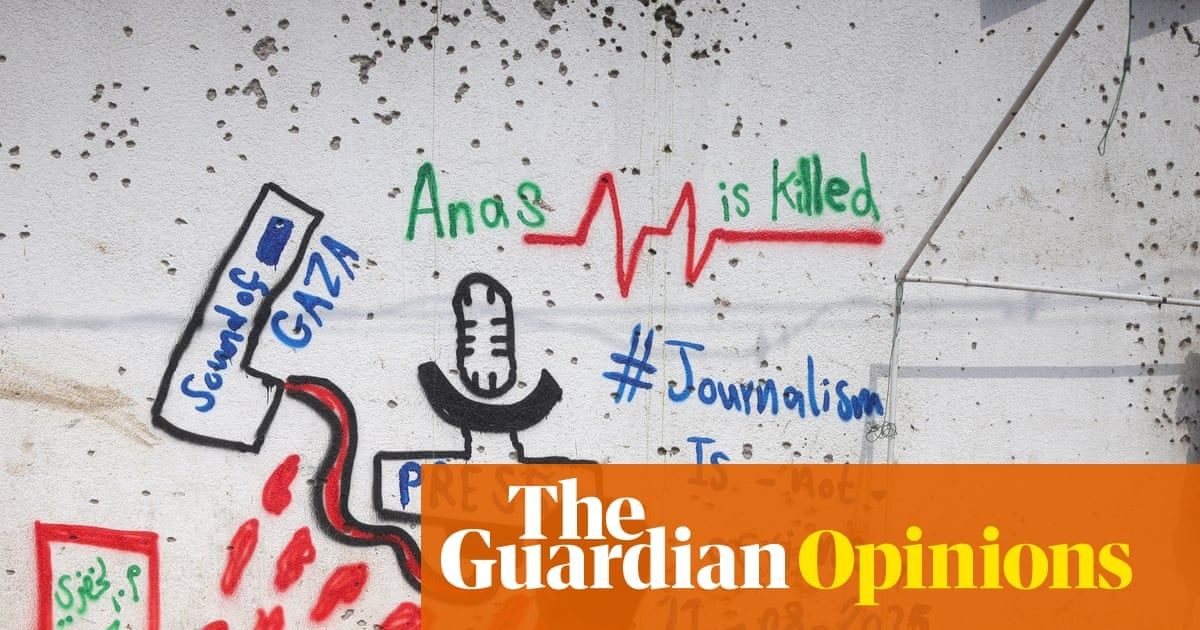
In the Shadow of Conflict: The Relentless Pursuit of Truth in Gaza

📷 Image source: i.guim.co.uk
The Unseen Battlefield
The air is thick with dust and the acrid smell of smoke. In the distance, the faint sound of sirens blends with the sporadic bursts of gunfire. Amid the chaos, a figure crouches behind a crumbling wall, fingers flying over a laptop keyboard. The screen flickers, casting a pale glow on their determined face. This is not a soldier—it’s a journalist, one of the few still documenting the human cost of a conflict that the world watches but struggles to comprehend.
In Gaza, where every corner tells a story of loss and resilience, journalists like Asef Hamidi navigate a landscape where truth is as fragile as the buildings reduced to rubble. According to theguardian.com, 2025-08-12T16:23:14+00:00, reporting from this region has become one of the most dangerous assignments in modern journalism. Yet, despite the risks, the commitment to bear witness remains unshaken.
Why This Matters
The ongoing conflict between Gaza and Israel has created a humanitarian crisis of staggering proportions. But beyond the immediate toll of lives lost and homes destroyed, there’s another casualty: the flow of accurate, on-the-ground information. Journalists in Gaza face unprecedented challenges, from restricted access to deliberate targeting, making their work not just difficult but deadly.
This matters because journalism in conflict zones serves as the world’s eyes and ears. Without it, misinformation thrives, accountability vanishes, and the voices of those most affected are silenced. The stakes are high, not just for the people of Gaza but for global understanding and justice. As Hamidi notes, the refusal to stop reporting is a defiance against erasure—a stand for truth in the darkest of hours.
The Mechanics of Reporting Under Fire
Covering a conflict like Gaza’s requires more than just courage; it demands ingenuity. Journalists operate with limited resources, often relying on encrypted messaging apps to share information securely. Power outages are frequent, forcing reporters to ration battery life or seek out generators. Internet access is sporadic, and when it’s available, it’s often monitored or throttled.
Physical safety is another constant concern. Press vests and helmets, once symbols of protection, have become targets in themselves. Many journalists work without institutional backing, relying on local networks and grassroots support to stay alive and continue their work. The process of verifying facts in such an environment is painstaking, with every detail cross-checked against multiple sources to avoid spreading misinformation.
Who Bears the Brunt?
The immediate victims of this crisis are, of course, the people of Gaza. But the ripple effects extend far beyond. Local journalists, many of whom are themselves displaced or grieving, carry the dual burden of witnessing their community’s suffering while documenting it for the world. International correspondents face ethical dilemmas—how to report without exacerbating trauma, how to balance objectivity with empathy.
For audiences globally, the scarcity of reliable reporting creates a vacuum filled by partisan narratives and propaganda. Governments and NGOs, reliant on accurate data to coordinate aid and policy, find themselves working in the dark. The erosion of trust in media, already a global issue, is exacerbated by the difficulty of accessing unfiltered truths from the ground.
The High Cost of Truth
The trade-offs in conflict journalism are stark. Speed versus accuracy is a constant tension—getting the story out quickly can mean life-saving information reaches the world, but haste risks errors that fuel further chaos. Privacy concerns are paramount, as identifying sources or locations can put lives at risk. Bias, whether perceived or real, is weaponized by all sides, leaving journalists vulnerable to accusations of partisanship.
Accessibility is another challenge. While international outlets may have the resources to deploy teams locally, smaller or independent journalists often lack the same protections. The result is a fragmented narrative, where some perspectives are amplified while others are drowned out. Yet, despite these hurdles, the commitment to reporting remains, driven by a belief that silence is the greater danger.
What We Still Don’t Know
Gaps in understanding persist, not for lack of trying but because of the inherent difficulties of reporting in a war zone. Casualty figures are often estimates, with verification hampered by access restrictions. The long-term psychological toll on journalists and civilians alike is poorly documented, though anecdotal evidence suggests it’s profound.
Another unknown is the full extent of censorship and suppression. While some cases of journalists being targeted are well-documented, many more go unreported. What’s needed to fill these gaps is greater international pressure for transparency, as well as support for independent media initiatives that prioritize local voices over sensationalism.
Winners and Losers
In this grim landscape, the winners are those who benefit from obfuscation—propagandists, authoritarian regimes, and parties invested in controlling the narrative. The losers are the civilians whose stories go untold, the journalists who risk everything to tell them, and the global public deprived of the truth.
Yet, there are glimmers of hope. Grassroots journalism collectives and citizen reporters are stepping into the breach, using social media and alternative platforms to share unfiltered accounts. Their work, though fraught with risk, represents a resilience that no amount of suppression can fully extinguish.
A Global Responsibility
The crisis in Gaza is not just a regional issue—it’s a test of the world’s commitment to press freedom and human rights. International bodies and governments must do more to protect journalists and ensure their access to conflict zones. News consumers, too, have a role to play: by supporting independent journalism, questioning sources, and demanding accountability.
As Hamidi’s reporting underscores, the fight for truth is as vital as any humanitarian effort. In a world where misinformation can be as destructive as any weapon, journalism remains one of the few tools we have to chart a path toward justice and resolution.
Reader Discussion
Open Question: How can global audiences better support journalists working in high-risk environments like Gaza? Share your thoughts on the role of social media, international pressure, or grassroots initiatives in keeping the truth alive.
#Gaza #Konflik #Jurnalis #Kemanusiaan #Kebenaran


